__logo.png)
__hanoi-water-puppets.jpg)
__angkor-wat-blue-reflections.jpg)
__vientiane-buddha-park-monks.jpg)
Mekong Delta floating markets: A complete guide - Handspan Travel
2The Mekong Delta region of Vietnam is well-known for stunning water landscapes, rich cultural heritage, and vibrant local life. A sunrise visit to one of the Mekong Delta floating markets remains one of the most authentic ways to see how the region actually lives. These markets offer much more than an unusual sightseeing experience. Instead, they allow tourists to understand a river-based way of life that has shaped the culture, food, and economy of southern Vietnam for generations. Let’s explore Mekong Delta floating markets with Handspan Travel!
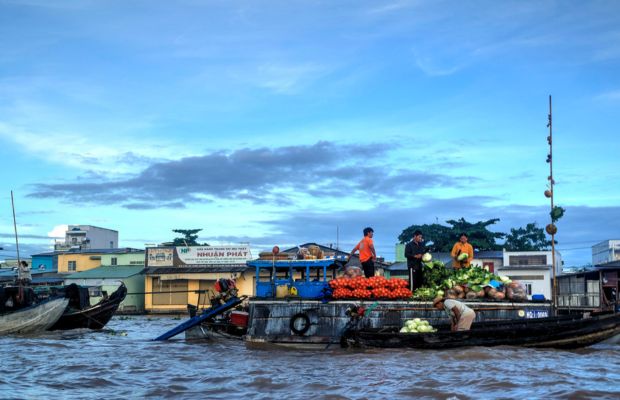
Cai Rang Floating Market
Through this blog post, you will find the following pieces of information.
What are the Mekong Delta floating markets?
The Mekong Delta is a vast network of rivers, canals, islands, and fertile agricultural land in southern Vietnam. For generations, waterways have been essential for transporting people and goods between communities. Mekong Delta floating markets developed naturally from this economy. Instead of travelling to a market on land, traders brought their produce directly onto the waterways and exchanged goods with others.
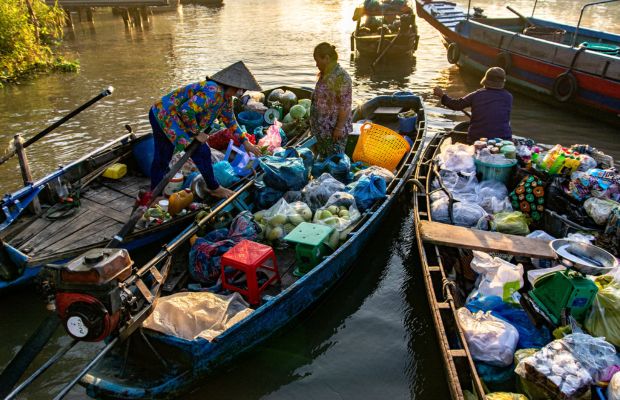
Phong Dien floating market
Today, some floating markets have become popular with visitors, while others remain primarily local trading places. Although their role has evolved as roads and modern transportation have developed, they remain an important part of the cultural landscape of the Mekong Delta.
Handspan's guide to the culture of the Mekong Delta explores this river civilisation in greater depth, including how waterways continue to influence everyday life, agriculture, food, and local traditions.
When is the best time to visit a Mekong Delta floating market?
Most floating markets are at their liveliest around dawn. Traders arrive early to buy and sell agricultural products, and the cooler temperatures make travelling on the water much more pleasant. Therefore, you may want to visit Mekong Delta floating markets early, from 04.00 a.m. to 06.00 a.m. for the most vibrant atmosphere. Watching the sky brighten while boats slowly emerge through the morning mist is one of the most memorable moments of a Mekong Delta journey.
The Mekong Delta can generally be visited throughout the year. Can Tho has a warm tropical climate, with a rainy season from approximately May to November and a drier period from December to April. Each season brings a slightly different atmosphere to the waterways and countryside.
How to get to the Mekong Delta floating markets
Most travellers visit the Mekong Delta from Ho Chi Minh City. For Cai Rang, Can Tho is the most convenient base. You can travel from Ho Chi Minh City to Can Tho, stay overnight, and take an early boat to the market the following morning.
This is generally a better approach than trying to visit Cai Rang as part of a rushed day trip. Staying overnight allows you to experience the market at its best without spending most of your morning travelling.
If you prefer to combine several Mekong experiences, a multi-day itinerary gives you more flexibility. For example, Handspan's Mekong Delta Essence: Cai Be to Can Tho Journey begins in Cai Be, explores the river islands and countryside, and continues to Can Tho for the Cai Rang market the next morning.
What can you do at a floating market?
Mekong Delta floating markets offer various exciting activities. Let’s find some things you can do at a floating market with Handspan Travel!
Having breakfast on the river
Food is an essential part of the floating-market experience. Small boats may sell noodles, rice dishes, drinks, fresh fruit, and Vietnamese coffee. So, you can stand and have breakfast right on the boat while enjoying the local atmosphere surrounding.
Watching how boats advertise their products
When visiting Mekong Delta floating markets, you will have a chance to see how locals advertise their products. Look closely at the tall poles on traders' boats. The goods displayed at the top tell customers what is being sold below. It is a simple but ingenious system that makes sense in a busy marketplace where boats are constantly moving.
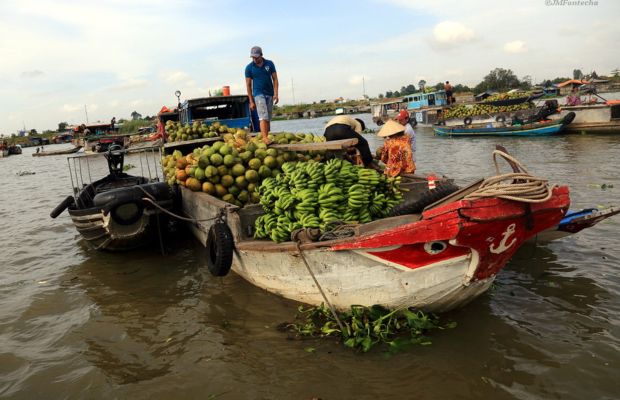
Fruit sellers at Long Xuyen Floating Market
Talking to local vendors
Undoubtedly, talking to local vendors is one of the best ways to explore the life of Mekong Delta floating markets. A friendly conversation can turn a short market visit into a more meaningful cultural experience. Your guide can help with introductions and translation, especially if you want to learn more about what vendors are selling or how their daily routine works.
Exploring the surrounding countryside
The floating market is only one part of the Mekong experience. After the morning on the river, continue into the surrounding countryside to discover fruit orchards, canals, villages, workshops, and local homes.
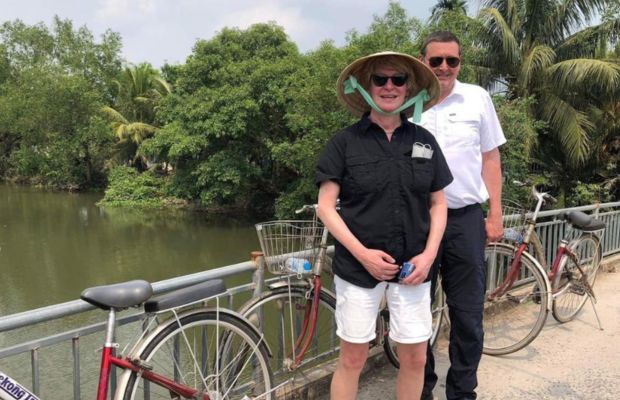
Cycling in Ben Tre
Handspan's Mekong itineraries combine floating markets with activities such as cycling, sampan rides, fruit tasting, craft visits, and visits to natural areas. Don’t hesitate to contact us for more detailed information.
Outstanding Mekong Delta floating markets
The Mekong Delta region of Vietnam is famous for its floating markets, which symbolize the long-standing culture of the region. Below are some outstanding Mekong Delta floating markets that you may want to visit.
Cai Rang Floating Market
Cai Rang Floating Market, located in Can Tho, is one of the must-visit Mekong Delta floating markets. The market is not only a vibrant trading place for local people but also an appealing attraction for tourists. In 2016, it was recognized as a national intangible cultural heritage, becoming the pride of local people.
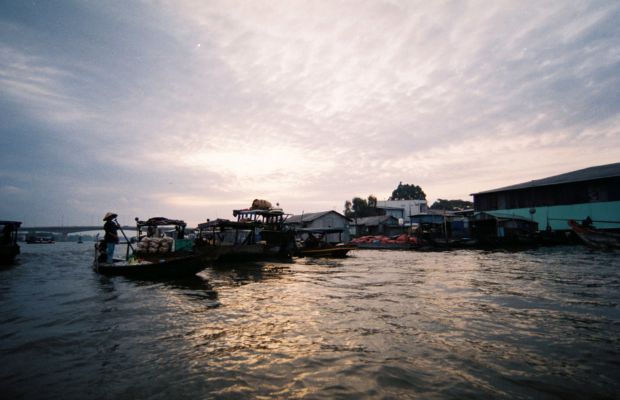
Cai Rang Floating Market at dawn
During your journey to explore the Cai Rang Floating Market, you will have a chance to enjoy many amazing activities. Here are some exciting experiences you may not want to miss.
- Learning about the vibrant trading activities at the market
- Enjoying local dishes on the river
- Listening to the Don Ca Tai Tu Music on the river
Besides those above things, you will also have an opportunity to try fruits in the garden by the river, visit the Que Toi Coconut Candy manufacturing workshop, and participate in making noodles at a traditional noodle factory.
For a deeper look, read Handspan's Navigating the Charms of Cai Rang Floating Market.
Cai Be Floating Market
Cai Be Floating Market is also among the wonderful Mekong Delta floating markets. It has always been one of the unique features of the region attracting both the locals and tourists. The market was founded in the 18th century. It serves as a place for the locals to buy, sell, and exchange goods. Visiting the market, you will not only have a chance to learn about the locals’ lives but also immerse yourself in the beauty of the rural. Besides the bustling trading activities, Cai Be still retains its poetic beauty with canals and lush green gardens.
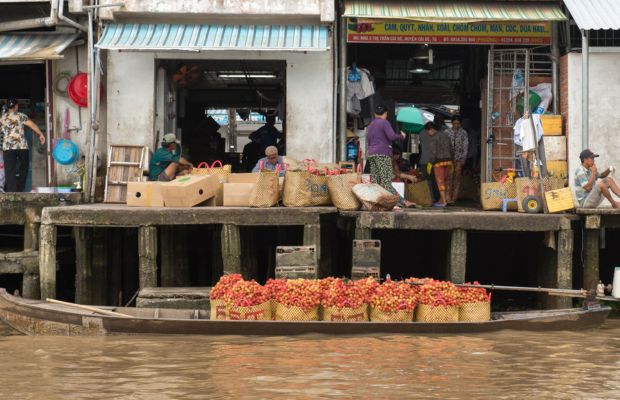
Cai Be Floating Market
Cai Be is particularly appealing if you want to combine a floating-market experience with a slower exploration of the surrounding countryside. Local produce, tropical fruits, vegetables, and other regional goods have traditionally been traded here.
With some amazing activities, Cai Be Floating Market is undoubtedly an amazing spot for your trip to explore the Mekong Delta region of Vietnam. Let’s come and take time to rest, enjoy local specialties, and admire the peaceful scenery of the region.
Long Xuyen Floating Market
For travellers looking for a more local atmosphere, Long Xuyen Floating Market is worth considering. While not as large or well-known as other Mekong Delta floating markets, it is still a wonderful spot. Located in An Giang Province, the market is smaller and less internationally famous than Cai Rang. That is precisely part of its appeal.
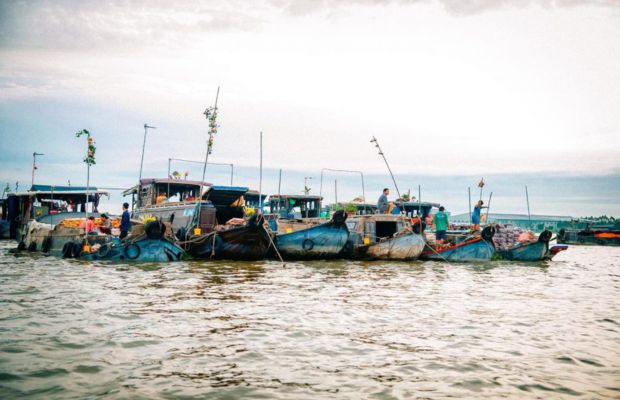
Long Xuyen floating market
The market provides a glimpse into the local way of life in the Mekong Delta. You will have an opportunity to immerse yourself in the local culture, witness traditional trading practices, and interact with the locals. Boats gather to exchange agricultural products and everyday goods, while smaller boats sell breakfast and drinks to traders and visitors.
Handspan's Exploring the Charms of Long Xuyen Floating Market provides more detail on how to visit and what you can expect.
Tra On Floating Market
If your idea of a perfect Mekong experience involves fewer crowds, Tra On Floating Market may be the better choice. Located in Vinh Long Province, Tra On is less well known internationally than other Mekong Delta floating markets. Its quieter atmosphere allows travellers to observe the everyday rhythm of river life without feeling that they are simply moving through a tourist attraction. Like other floating markets in the region, Tra On is likely to offer a variety of goods for sale. Visiting the market, you will find everything from fresh fruits to vegetables, seafood, and other local products.
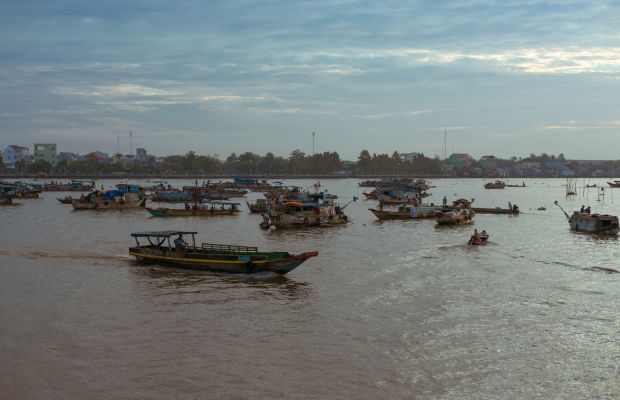
Tra On Floating Market
More detailed information about other Mekong Delta floating markets can be found here.
Tips to know when you visit Mekong Delta floating markets
Visiting the Mekong Delta floating markets is such an immersive experience. However, to enjoy the markets at their fullest, you may want to follow these tips and advice below.
Planning your timing
Most of the floating markets in the Mekong Delta of Vietnam are the most lively in the early morning. So, let’s wake up and depart early so that you will not miss the crowded atmosphere.
Dressing comfortably
You may want to wear lightweight, breathable clothing suitable for the tropical climate. Don't forget a hat, sunscreen, and mosquito repellent.
Respecting the locals
While the locals in the region are extremely friendly, you should ask for permission before taking photos. Besides, be respectful of the local culture and traditions, and be aware of your surroundings to avoid disrupting local activities.
Buy something when appropriate
A coffee, breakfast, fruit, or small purchase is a simple way to participate in the local economy rather than treating the market purely as a photo opportunity. So, buy something you would like to bring home or buy something to eat to support locals.
Avoid littering
Keep plastic bottles, food packaging, and other waste with you until you can dispose of it properly. This helps to protect the river and surrounding environment.
Travel with patience
The market may look chaotic at first, but there is an underlying rhythm to the movement of boats and people. Give yourself time to observe it rather than rushing from one photo opportunity to the next.
FAQs about the Mekong Delta floating markets
How many days do you need in the Mekong Delta?
If you only want to see one floating market, two days and one night can provide a much more relaxed experience than a rushed day trip from Ho Chi Minh City. With more time, however, the Mekong Delta reveals much more than its markets. You can cycle through rural villages, visit fruit orchards, travel by sampan through narrow canals, discover traditional crafts, meet local families, and explore the region's diverse Khmer and Cham communities.
What is the most famous floating market in the Mekong Delta?
Cai Rang Floating Market is the most famous and one of the easiest floating Melong Delta floating markets to visit. It is particularly lively in the early morning, when boats gather to trade fruit, vegetables, breakfast, and other goods. For first-time visitors to the Mekong Delta, Cai Rang is a good introduction to the region's river-based culture.
Are Mekong Delta floating markets open every day?
Most traditional floating markets operate in the early morning rather than following the same opening hours as a conventional market on land. However, the level of activity can vary depending on the season, weather, and local trading patterns. If seeing an active market is a priority, travelling with a local guide can help you time your visit well.
Can I eat breakfast at a Mekong Delta floating market?
Yes. Eating breakfast on the river is one of the most enjoyable parts of visiting a floating market.
What should I bring to a floating market?
Bring lightweight clothing, sunscreen, a hat, insect repellent, comfortable footwear, and a reusable water bottle. A rain jacket can also be useful during the wetter months. Most importantly, bring some Vietnamese cash if you would like to buy breakfast, fruit, coffee, or other small items from local vendors.
Are Mekong Delta floating markets suitable for families?
Yes. A floating-market visit can be an enjoyable family experience, particularly for children interested in boats, food, and everyday life.
In conclusion, you have just known some detailed information about the Mekong Delta floating markets. If you want to book a Mekong Delta tour package, don’t hesitate to contact our team. Whether you want to visit the iconic Cai Rang Floating Market, discover the quieter Long Xuyen market, or explore the Mekong beyond its famous waterways, Handspan offers journeys designed around local experiences and slower exploration.
Explore Handspan's Mekong Delta tours and discover more inspiration through our Mekong Delta travel experiences.